
John
John
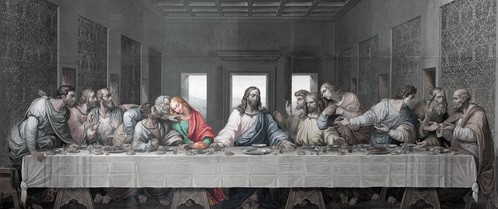
When Jesus called John to be a disciple, he was fishing with his brother, James, and his father, Zebedee. When John encountered Jesus, he and his brother left their fishing nets behind to become Jesus’ followers. However, even though John was considered the beloved disciple, he did have a darker side. He and his brother were called the Sons of Thunder. On one occasion, Jesus and His disciples were going into a Samaritan village. The disciples were sent ahead to make arrangements, but the people there did not welcome Jesus. When this occurred, James and John said, “Lord, do you want us to call down fire from heaven to destroy them?” (Luke 9:54) Jesus rebuked them. Another time, James and John asked to sit on thrones beside Jesus when He comes in glory. Jesus rebuked them again and warned them that they would face much suffering in the future. John was the only disciple at Jesus’ crucifixion. From the cross, Jesus commended His mother to John’s care.
Fast forward a few years and we see John, in contrast, being called the apostle of love. In his writings, he emphasizes the importance of love and the promise of eternal life to believers. After Jesus’ death, there was so much persecution of Christ followers under Herod Agrippa that John took Jesus’ mother to Ephesus and cared for her there until she died (mid 60’s). While there, he wrote the Gospel of John and guided the Ephesian church . Then, he and Peter (who had paired together before Jesus’ death) emerged as leaders of the Christians who performed miracles (Acts 3:1-4, 3-11), went to jail (Acts 4:1-3), defended the faithful before the Sanhedrin (Acts 7:-12, 19), and served as emissaries to confirm the reception of the Gospel.
John was the youngest of the apostles and the last to die, so, during his 95 years, he was able to write five books of the Bible: the Gospel of John, the three letters of John, and Revelation. He wrote all of his books after the other books of the New Testament. Consequently, his work is more explicable to modern readers because he had time to answer the doubts and questions raised in 50+ years after the resurrection. He is also reported to have arranged the books and finalized the canon of the New Testament.
Tertullian (155-300 AD) tells us that, in 95 AD, the Roman Emperor Domitian was vigorously persecuting Christians and he ordered John to be executed by throwing him into a cauldron of boiling oil. When John suffered nothing and did not die but continued preaching from the cauldron, Domitian was angry and then had him exiled to the isle of Patmos, a prison colony off the coast of Turkey where John couldn’t talk to anyone (95 AD). Eighteen months later John was released under Emperor Marcus Coccceius Nerva and moved to Turkey where he died of old age. He was the only disciple who died naturally.
John did not die a martyr’s death, but it wasn’t because Domitian didn’t try. John certainly lived a martyr’s life. What made this dramatic change in John’s life? He said it was the resurrection of Jesus from the dead. Some today argue Jesus’ resurrection is a lie. However, no man will willingly offer himself to die in a cauldron of boiling oil for something he knew was a lie.
Fast forward a few years and we see John, in contrast, being called the apostle of love. In his writings, he emphasizes the importance of love and the promise of eternal life to believers. After Jesus’ death, there was so much persecution of Christ followers under Herod Agrippa that John took Jesus’ mother to Ephesus and cared for her there until she died (mid 60’s). While there, he wrote the Gospel of John and guided the Ephesian church . Then, he and Peter (who had paired together before Jesus’ death) emerged as leaders of the Christians who performed miracles (Acts 3:1-4, 3-11), went to jail (Acts 4:1-3), defended the faithful before the Sanhedrin (Acts 7:-12, 19), and served as emissaries to confirm the reception of the Gospel.
John was the youngest of the apostles and the last to die, so, during his 95 years, he was able to write five books of the Bible: the Gospel of John, the three letters of John, and Revelation. He wrote all of his books after the other books of the New Testament. Consequently, his work is more explicable to modern readers because he had time to answer the doubts and questions raised in 50+ years after the resurrection. He is also reported to have arranged the books and finalized the canon of the New Testament.
Tertullian (155-300 AD) tells us that, in 95 AD, the Roman Emperor Domitian was vigorously persecuting Christians and he ordered John to be executed by throwing him into a cauldron of boiling oil. When John suffered nothing and did not die but continued preaching from the cauldron, Domitian was angry and then had him exiled to the isle of Patmos, a prison colony off the coast of Turkey where John couldn’t talk to anyone (95 AD). Eighteen months later John was released under Emperor Marcus Coccceius Nerva and moved to Turkey where he died of old age. He was the only disciple who died naturally.
John did not die a martyr’s death, but it wasn’t because Domitian didn’t try. John certainly lived a martyr’s life. What made this dramatic change in John’s life? He said it was the resurrection of Jesus from the dead. Some today argue Jesus’ resurrection is a lie. However, no man will willingly offer himself to die in a cauldron of boiling oil for something he knew was a lie.
Posted in Fate of the Disciples
Recent
The Big Reveal...A First Connection.. The Tunnel of Tears
July 23rd, 2026
Things are Taking Shape(s).... Vectors of HOPE..Quédese, señor
July 23rd, 2026
The HOPE at the Top of the Hill...The HOPE through the Hole in the Wall...The HOPE that Glows in the Darkness
July 21st, 2026
First Day of School, A Great Hope (for a Living Room Too).. and "Anda"
July 21st, 2026
Listening in Tongues, Two Purposes for a Tree... Pray for Pavas
July 19th, 2026
Archive
2026
July
James - The Son of ThunderJohnThaddeusMatthewPhilipThomasConclusionCosta Rica SMT26 T-Minus 18 hours and counting....Location 9.9325° N, 84.0800° W...and Feeling FineListening in Tongues, Two Purposes for a Tree... Pray for PavasFirst Day of School, A Great Hope (for a Living Room Too).. and "Anda"The HOPE at the Top of the Hill...The HOPE through the Hole in the Wall...The HOPE that Glows in the DarknessThings are Taking Shape(s).... Vectors of HOPE..Quédese, señorThe Big Reveal...A First Connection.. The Tunnel of Tears
2025
April
Czech Republic Mission Trip BackgroundCzech Republic Teaching ThemesWhat Happened to Jesus' Disciples?Czech Republic Day One & TwoCzech Republic Day ThreeCzech Republic Day FourCzech Republic Day FiveCzech Republic Day SixCzech Republic Day SevenCzech Republic Day EightCzech Republic Day NineCzech Republic Day Ten
June
2024
March
WE ARRIVED....PURA VIDADay 2 - Getting to Know Costa RicaDay 3 - Cultural Experience, Church, and Final PreparationsDAY 4 (Part 1) – It's Monday...PreparationsDay 4 (Part 2) Service Project and Day CampDay 5 - Primed for MinistryDay 6 - Painting and GenesisDay 7 - Final Day at Hope PartnersDay 7 - Hope Partners Recap VideoDay 8 - La PlayaDay 9 - Volcano, Bible School, and Cultural Experience ExtravaganzaMeet Our Dubai Mission Team
April
May
July
No Comments